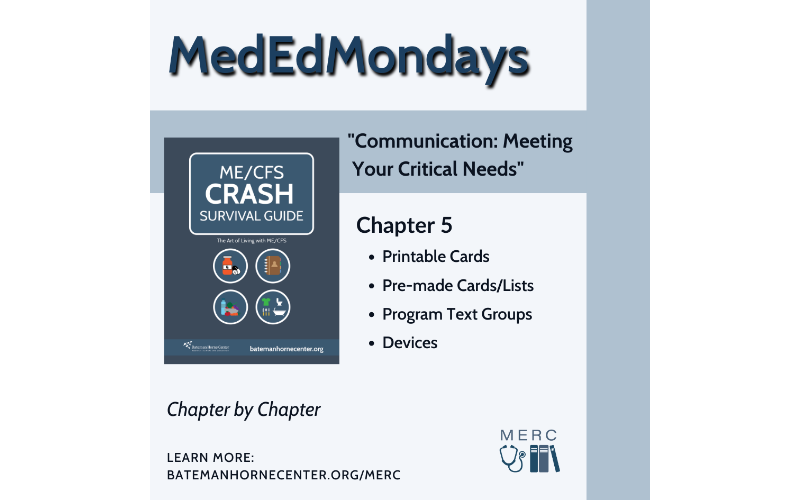
This blog post covers the fifth chapter of the ME/CFS Crash Survival Guide. The information provided can also apply to individuals with long COVID and other multi-system chronic complex illnesses that have a PEM component.
Click here to download the entire guidebook.
Chapter 5: Communication
Meeting Your Critical Needs
During a crash, it can be difficult to communicate with others. This section references downloadable and printable communication cards to help you communicate your needs. Consider keeping these in your bedside Crash Care Kit or on your electronic device to point/show your caregiver, loved one, or support services.
Communication Cards
- Emergencies
- In the event of an emergency, have a life alert device on or near you, and pre-programmed emergency contacts in your phone.
- Add emergency contacts to “Favorites” and in the “Emergency Medical ID” section of your phone (as applicable).
- Consider pre-programming text groups which can be easily accessed in a crash.
- Label ICE (in case of emergency) next to your emergency contacts in your phone.
- Have pre-made cards available to communicate:
- Critical needs (food, water, medicine, toileting, etc.)
- Symptoms and sensitivities (nausea, light or sound sensitive, etc.) • Comfort needs (blanket, heating pad, etc.)
- Emergencies (call 911, chest pain, etc.)
- Devices and modes of communication
- Keep your electronic devices charged.
- Consider a long charging cable that is accessible to you in bed or on the couch.
- Pre-make lists of your own needs if they are not already available on the communication cards provided in the appendix.
This blog post covers the fifth chapter of the ME/CFS Crash Survival Guide.
Click here to download the entire guidebook.
The information provided can also apply to individuals with long COVID and other multi-system chronic complex illnesses that have a PEM component.
Bateman Horne Center relies on charitable contributions to produce
educational content such as the ME/CFS Crash Survival Guide.
Support our work by donating today!
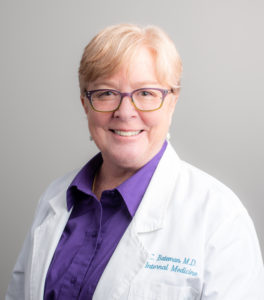 Lucinda Bateman, MD, is a renowned clinician, researcher, and educator. Her Johns Hopkins University Medical School training instilled an approach to care that she has employed throughout her career – the patient comes first and the unknown or unexplained does not equate to a lack of proper and compassionate care. Since starting her own practice in 2000, she has served on six boards or committees, been the principal investigator for 45 studies, authored/coauthored 40 journal articles, served as adjunct instructor and adjunct assistant professor in the University of Utah Departments of Preventative Medicine, Internal Medicine, and Anesthesiology, and lectured around the world.