Physical Therapy Must Catch Up: Teaching ME/CFS Is No Longer Optional

This fall, my co-authors and I published a long-overdue article explaining why Doctor of Physical Therapy (DPT) programs must begin teaching ME/CFS in their classes and include it in clinical training. (You can read it here).
Our paper serves as a roadmap for programs in how to teach about ME/CFS and other related diagnoses, such as Long COVID.
ME/CFS (myalgic encephalomyelitis/chronic fatigue syndrome) is a serious, multi-system illness that disrupts how the body produces and manages energy. Despite the severity, only about one-third of U.S. medical schools teach anything about it.[1] Although we don’t have data on physical therapy (PT) programs, patient experiences in PT clinics and the lack of ME/CFS training in medicine overall suggests that most PT students likely graduate with little to no knowledge of the illness.
This lack of training is especially dangerous because of post-exertional malaise (PEM). PEM, the core feature of ME/CFS, is the delayed worsening of symptoms due to physical, cognitive, emotional or sensory effort, sometimes for days, weeks, or longer. This means many PT strategies, especially graded exercise with automatic activity progression, can be not only ineffective but harmful. [2] Without education on ME/CFS and PEM, PTs may unintentionally cause setbacks, or long-term decline.
In 2025, this knowledge gap is especially concerning. A decade ago, the Institute of Medicine (now the National Academy of Medicine) conducted an extensive review of the scientific literature and concluded that ME/CFS is a biological disease—not psychological, not deconditioning, and not something patients should “push through.” Since then, another ten years of research—though still severely underfunded—has only strengthened that evidence. At the same time, the COVID-19 pandemic has brought widespread clinical visibility to post-infectious illness, with many patients with persistent symptoms ultimately meeting ME/CFS diagnostic criteria.
In a recent paper by Suzanne Vernon et al., post-pandemic rates are estimated to be as high as 4.5 percent, translating to approximately 11 million Americans with Long COVID–associated ME/CFS. This is in addition to the more than 3.3 million individuals living with ME/CFS prior to the pandemic. Even more concerning, the majority of these patients remain undiagnosed.Yet despite this growing burden, formal medical and rehabilitation training has not kept pace with the science.
PTs are often among the first healthcare professionals people see when they are struggling with mobility, pain, or disabling fatigue. In the U.S. alone, there are more than 310,000 licensed PTs, with another 105,000 across the U.K. and Canada combined.[5],[6] If this enormous workforce had formal education of ME/CFS and PEM, it could immediately and dramatically change the lives of millions. PTs already possess many of the skills needed—energy conservation methods, pacing, autonomic regulation strategies, and patient-centered decision-making. Now, they simply need training grounded in current science pertaining to ME/CFS and PEM.
Teaching ME/CFS management is feasible for PT programs, and should not require an overhaul of PT programs. Concepts like energy management, autonomic dysfunction, and chronic illness management, fit naturally into existing cardiopulmonary, neurology, ethics, and pharmacology course work. Preparing students to recognize and manage a multi-layered condition like ME/CFS, with PEM at its core, will benefit not only people with ME/CFS but also patients with Long COVID, dysautonomia, connective tissue disorders, and immune dysregulation.
To improve safety and quality of life for people with ME/CFS, education must happen in two ways:
- Current PTs need updated, science-based information about ME/CFS and PEM. Reliable resources include the Bateman Horne Center’s Rehabilitation webpage and Clinical Care Guide chapters for allied professionals.
- PT schools must integrate ME/CFS into their programming so that every graduate knows how to help (and avoid harming) patients with ME/CFS and similar conditions. Our publication offers a practical roadmap for programs ready to align their training with modern science and public health needs.
Until this happens, many people with ME/CFS will continue to encounter care that, despite clinicians’ best intentions, can end up being unhelpful or even harmful.
How can you help?
Whether you’re a patient, caregiver, healthcare provider, or advocate, share the publication with anyone working in rehabilitation:physical therapists (PTs), occupational therapists (OTs), or speech-language pathologists (SLPs). Using this road map can help patients receive the safe, informed care they deserve.
[1] Jason LA, Mirin AA. Updating the National Academy of Medicine ME/CTFS prevalence and economic impact figures to account for population growth and inflation. Fatigue: Biomedicine, Health & Behavior. 2021;9(1):9-13.doi.org/10.1080/21641846.2021.1878716
[2] Bateman L, Bested AC, Bonilla HF, Chheda BV, Chu L, Curtin J, et al. Myalgic Encephalomyelitis/Chronic Fatigue Syndrome: Essentials of Diagnosis and Management. Mayo Clinic Proceedings. 2021;96(11):2861-2878.doi.org/10.1016/j.mayocp.2021.07.004
[3] US Institute of Medicine. Beyond Myalgic Encephalomyelitis/Chronic Fatigue Syndrome: Redefining an Illness. Washington (DC): National Academies Press (US); 2015:1-282. doi.org/10.17226/19012
[4] CDC. Clinical Overview of ME/CFS. Myalgic Encephalomyelitis/Chronic Fatigue Syndrome. Published 2024. https://www.cdc.gov/me-cfs/hcp/clinical-overview/index.html
[5] 2024 FSBPT Census of Licensed Physical Therapists and Physical Therapist Assistants in the United States. FSBPT; 2024. Accessed November 15, 2025. https://www.fsbpt.org/
[6] Minns, Newman M, Herbland A, et al. Work related well-being in the UK physiotherapy workforce: Part I. Quantitative findings from the YOURvieWS cross-sectional e-survey. Physiotherapy. 2025;129(December 2025):101806-101806. doi.org/10.1016/j.physio.2025.101806
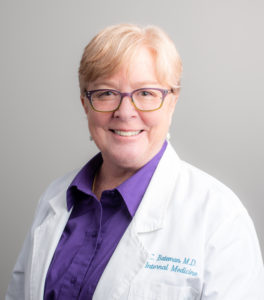 Lucinda Bateman, MD, is a renowned clinician, researcher, and educator. Her Johns Hopkins University Medical School training instilled an approach to care that she has employed throughout her career – the patient comes first and the unknown or unexplained does not equate to a lack of proper and compassionate care. Since starting her own practice in 2000, she has served on six boards or committees, been the principal investigator for 45 studies, authored/coauthored 40 journal articles, served as adjunct instructor and adjunct assistant professor in the University of Utah Departments of Preventative Medicine, Internal Medicine, and Anesthesiology, and lectured around the world.