Some of you have followed Bateman Horne Center for many years.
Some of you may know us through our resources, educational programs, or support groups.
And for some of you, this may be your first introduction.
As we enter 2026 and a new chapter for Bateman Horne Center, we wanted to take a moment to share who we are, where we began, and how a local clinic in Utah has grown into a center with national reach.
Where it began
While our founder Dr. Lucinda Bateman was completing her medical training at Johns Hopkins in the late 1980s, her sister, Shauna Bateman Horne, became seriously ill. Despite extensive medical care, Shauna struggled for years without an accurate diagnosis or effective treatment. Cindy’s determination to help her sister eventually led to a diagnosis of myalgic encephalomyelitis/chronic fatigue syndrome (ME/CFS), a devastating condition that, at the time, was poorly understood and often dismissed.
That experience shaped Dr. Bateman’s career. In the 1990s, as an internal medicine physician in Utah, she began seeing patients with similar symptoms and unmet needs. By 2001, she established the Fatigue Consultation Clinic (FCC), dedicating her practice to the diagnosis and treatment of ME/CFS and fibromyalgia at a time when few clinicians were willing or able to do so.
From a single clinic to a center of excellence
As Dr. Bateman’s clinical expertise grew, so did demand from patients, researchers, and institutions alike. At the same time, patients and advocates recognized the need for education and outreach beyond the clinic. In July 2002, they helped establish OFFER (Organization for Fatigue and Fibromyalgia Education and Research), a small nonprofit dedicated to educating patients, providers, and the public through conferences, support groups, and freely accessible resources.
In March 2015, these efforts formally came together with the creation of the Bateman Horne Center of Excellence, formed through the merger of Dr. Bateman’s clinic and OFFER. Named in honor of Shauna Bateman Horne, the Center was built to advance clinical care, research, education, and to mainstream understanding of ME/CFS, fibromyalgia, and related conditions within medicine.
A small clinic doing big work
Today, Bateman Horne Center remains a local clinic based in Salt Lake City, with an ambitious goal of influencing care for patients with ME/CFS and related infection-associated chronic conditions (IACCs) nationwide. When patients walk through our doors, personalized care plans are built, care is coordinated, and every visit comes with a clear commitment: no patient leaves feeling invalidated, unheard, or unsupported. Since its founding, Bateman Horne Center has seen hundreds of patients, supported by a lean and talented staff. What we learn in the clinic matters not only for the patients we see, but for how those insights extend far beyond our walls.
From the beginning, Bateman Horne Center was never meant to serve only those who could travel to Salt Lake City. As the clinic grew, so did our commitment to making knowledge and care more accessible through clinical guides, educational programs, virtual support groups, and tools that translate complex care into practical, usable frameworks for patients, caregivers, and providers. With patient consent and ethical oversight, care delivered in the clinic also helps advance the field, as patients who choose to participate may contribute clinical data, biological samples, or insights to biobanking and clinical research efforts. In this way, individual care contributes to collective progress.
Building toward broader access
As we move into 2026, Bateman Horne Center is taking the next step in its evolution by formalizing and scaling what we have learned through our Access to Care Model — a framework designed to extend specialized, coordinated care beyond a single clinic.
The model connects expert evaluation at Bateman Horne Center with care delivered closer to home. Patients complete coordinated multidisciplinary evaluations, which are synthesized into a clear, implementation-ready care plan designed to be carried forward by a patient’s primary care provider or specialist. Bateman Horne Center clinicians support this transition through peer-to-peer consultation, helping translate specialized guidance into day-to-day care.
Patients also receive education, resources, and access to support groups so that care continues beyond a single visit and a single location. Grounded in years of clinical experience and shaped by persistent gaps in diagnosis and access, the Access to Care Model helps ensure that specialized care is available wherever patients live.
What starts here aims to change care everywhere
Bateman Horne Center will always be a place where patients are seen, care is delivered, and learning happens in real time.
At the same time, the work that happens here, in exam rooms, care conferences, research meetings, and patient conversations, is shaping a broader vision for access to care.
That is what we mean by local care, national impact.
As we enter this new chapter, we are grateful to the patients, families, clinicians, donors, and community members who have made this work possible — and we look forward to continuing to build access, together.
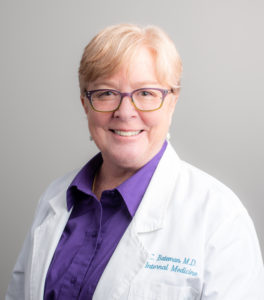 Lucinda Bateman, MD, is a renowned clinician, researcher, and educator. Her Johns Hopkins University Medical School training instilled an approach to care that she has employed throughout her career – the patient comes first and the unknown or unexplained does not equate to a lack of proper and compassionate care. Since starting her own practice in 2000, she has served on six boards or committees, been the principal investigator for 45 studies, authored/coauthored 40 journal articles, served as adjunct instructor and adjunct assistant professor in the University of Utah Departments of Preventative Medicine, Internal Medicine, and Anesthesiology, and lectured around the world.