Redefining Access to Complex Care
Our Access to Care Model is a new, scalable framework that brings informed, multidisciplinary care to patients everywhere.

The Challenge
Millions of people across the U.S. and globally live with complex, infection-associated chronic conditions (IACCs) such as ME/CFS and Long COVID. Yet only a handful of clinics nationwide can offer comprehensive, evidence-informed care. Most patients wait months—or even decades—for a diagnosis, a care plan, or a clinician who understands their needs.
At the same time, funding for research and clinician education is shrinking. Without innovation, the gap between patient need and provider capacity will only grow.
The Solution: The Access to Care Model
The Bateman Horne Center (BHC) is redefining the care landscape for IACCs. Our Access to Care Model is a new, scalable framework that brings informed, multidisciplinary care to more patients.
It combines expert evaluation, medical provider collaboration, patient education, research and ongoing support into a seamless care pathway that can be implemented locally.
EVERY CONTRIBUTION HELPS SHORTEN THE TIME BETWEEN CONCEPT AND CARE.
The Framework
1. Comprehensive Multidisciplinary Evaluation
 Occupational Therapy (OT) Evaluation (Virtual) –Assesses an individual’s ability to perform activities of daily living and maintain independence, guiding recommendations for pacing, activity modification, and adaptive living strategies, so patients can be better supported in their everyday living needs.
 Physical Therapy (PT) Evaluation (In-Person or Virtual) – Assesses physical function and how biomechanics are impacting the ability to carry out daily activities and energy expenditure and PEM.
 Neurocognitive or Speech-Language Pathology (SLP) Evaluation (Virtual)– Provides a detailed assessment of cognitive and communication function to better understand fatigue-related challenges and create strategies that support daily life and work performance.
 BHC Clinical Assessment (In-Person or Virtual) – medical evaluation taking a full systems approach to diagnose ME/CFS, Long COVID and related comorbid conditions.
HELP CREATE THE BLUEPRINT FOR CARE THAT CAN BE ADOPTED IN LOCAL COMMUNITIES.
2. Personalized Care Plan
Each plan includes:
 Diagnoses and differential considerations
 Functional, physical, and cognitive findings
 Disability or accommodation letters of support
 Referral templates and order language (as appropriate)
 Recommendations for disease management including: pacing, medications, interventions and daily living modifications
YOUR CONTRIBUTION WILL ENSURE PATIENTS ARE SEEN AND SERVED.
3. Continuity & Collaboration
 One to two annual peer-to-peer consults between BHC clinicians and each patient’s hometown care team, with future plans to expand through a broader trained provider network.
 Patient education session – Helps patients understand their care recommendations, while reviewing medication use, pacing techniques, and personalized care strategies.
 Enrollment in patient and caregiver support groups for continued learning and community connection.
BHC IS REVOLUTIONIZING CARE FOR COMPLEX CONDITIONS.
4. Education & Empowerment Resources
 The BHC Clinical Care Guide
 ME/CFS Crash Survival Guidebook
 A State-by-State Resource Directory for access to services and living supports
Why Help Us Build Access Now?
The Access to Care Model is being built now. Infrastructure development, staffing, and training are underway, with hope of launching in 2026.
Philanthropic support today accelerates that timeline.
The more we raise now, the faster we can serve thousands more people who can’t wait for care.
Why Early Investment is Crucial
Early investment fuels the hiring, training, and technology that bring this model to life faster. Philanthropic gifts are the catalyst for everything that follows: clinical readiness, biobanking, clear patient subsets for clinical trials, pilot launch, and ultimately, national replication.
How Your Support Makes a Difference
Your support accelerates the speed in which we can bring this model to life—and builds a promise for discovery, care, and access that will shape the future of complex disease management across the country.
The initial pilot requires approximately $3–4 million to establish the infrastructure and training needed to bring the model to life. While the model can launch with as little as $500,000 in initial support, our goal is to build toward approximately $1.2 million to fully fund its first year of operations—covering patient evaluations, provider time, technology, and coordination across care teams.
But our vision doesn’t end there. Sustained philanthropic support will enable replication at additional sites and the creation of a national teaching consortium. In the long term, an endowed fund will ensure that this model, and the equitable care it delivers, remains accessible and scalable for years to come.
Why This Matters

For patients
Learn more

For providers
Learn more

For scientists
Learn more

For donors
Your investment creates the blueprint for a replicable, scalable model of care that can be adopted in medical programs and local communities nationwide. Your gift also safeguards equitable care at a time when access to healthcare is increasingly uncertain. Private support ensures that patients with complex, often overlooked conditions remain seen and served – regardless of where they live.
Alternate ways to contribute: securities, estate planning, workplace giving, wire transfers.
Contact our Executive Liaison, Angela, at [email protected]
JOIN THE BUILDING ACCESS NOW CAMPAIGN.
FAQs

What makes this model different from traditional specialty care?
Instead of seeing patients only within one clinic, BHC’s model empowers local providers to deliver evidence-informed care using BHC’s multidisciplinary management plan, consult access, and educational materials. By serving as an interdisciplinary expert team, BHC offers local providers the specialized guidance needed to carry out comprehensive care “at home.” This approach bridges expert knowledge with hometown implementation—bringing informed, coordinated care to patients through their community-based clinicians.
When will the model be available to patients?
The pilot phase is projected to launch in late 2026. We’re actively building the foundation now: training staff, developing protocols, and integrating digital tools to make this possible sooner. Every donation can help accelerate this timeline.
Can patients sign up now?
Not yet. Patients can fill out our interest form and join our mailing list to receive updates when pilot enrollment opens. In the meantime, all existing BHC resources, including the Clinical Care Guide and education events, remain freely available.
How does philanthropy make a difference?
Early investment fuels the hiring, training, and technology that bring this model to life faster. Philanthropic gifts are the catalyst for everything that follows: clinical readiness, biobanking, clear patient subsets for clinical trials, pilot launch, and ultimately, national replication.
Your support accelerates the speed in which we can bring this model to life—and builds the infrastructure for discovery, care, and equity that will shape the future of complex disease management across the country.
Is this model only for ME/CFS and Long COVID?
The Access to Care framework is designed around infection-associated chronic conditions (IACCs), including ME/CFS, Long COVID, dysautonomia, and related complex comorbidities. Its structure can later be replicated and adopted in medical and community centers across the country.
What is the long-term vision?
To create a teaching and replication-ready model—one that gives patients answers through accurate diagnosis and guided care, trains clinicians to deliver evidence-informed treatment, empowers patients with answers and guidance, and transforms how chronic illness care is delivered across the country.This model also strengthens our capacity to diversify biobanking efforts and support the development of new clinical trials.
How will I know if I'm eligible for the Access to Care Model?
The initial pilot will focus on adults with a confirmed or suspected diagnosis of ME/CFS, Long COVID, or a related infection-associated chronic condition (IACC). As the model scales, we’ll expand to include pediatric and additional complex chronic populations. The model is intentionally structured to include homebound and bedbound patients, ensuring that the most vulnerable are not left behind.
How much will the Access to Care cost?
The cost for patients will be determined by the amount of funding received for the Access to Care model. Our goal is to make it affordable for all patients. Every dollar counts. Please encourage others to support this work so we can reduce financial barriers for patients who urgently need care.
Will insurance cover this evaluation or care plan?
As of January 2025, BHC transitioned to a full cash-pay model. This allows us to provide timely, comprehensive care without the administrative barriers and limitations of insurance. The Access to Care program will also operate as a cash-pay, consultation-only model. This approach enables BHC to guide care across state lines without the legal constraints of multi-state licensure, while maintaining the highest standards of clinical oversight and expert consultation.Insurance reimbursement for consultative care is payer-dependent, and patients will be responsible for submitting any claims directly to their insurer.
Do I have to travel to BHC to participate?
If you’re able to travel to BHC, we prefer to do the physical therapy assessment and clinical evaluation in-person. However, if you are bedbound or homebound, you can still participate. In those cases, we partner with your local primary care provider or specialist, who performs the physical exam and orders any necessary labs—serving as our in-state extension.
This flexible model ensures that patients aren’t excluded because of geography or mobility. It’s part of BHC’s broader commitment to equitable access—meeting people where they are and bridging expert knowledge with hometown care.
What happens after my care plan is created?
You’ll receive a patient education session led by a physician with lived experience, focused on helping you and your caregiver understand the care management plan, including pacing, and practical application in daily life.
Following the multidisciplinary evaluations your medical care will transition to a pathway such as:
- Your hometown medical provider who receives training and access to BHC’s peer-support network
- A nurse practitioner or physician participating in a national consortium of trained medical providers who can continue management with support from BHC
- Specialty clinic and concierge physicians committed to evidence-informed care
- Academic medical centers participating in Access to Care training pilots
How is privacy handled?
All patient data will be protected under HIPAA standards and securely integrated into BHC’s research and quality-improvement systems only with patient consent.
Can international patients participate?
Initially, the Access to Care Model will serve U.S. residents. However, BHC’s educational materials and training resources will remain freely available worldwide.
Will the current BHC patients' medical care be impacted by this model?
The care of current BHC patients will not change.
How can my current provider participate?
When the Access to Care Model launches, your existing practitioners are welcome to participate in the evaluation process and engage in our provider education forums. After a patient completes the model, their clinician will receive a comprehensive multidisciplinary care plan, along with the option for two paid peer-to-peer consultations with our providers. Any additional consultations beyond those two sessions will be billed separately.
How are donations used?
Your gift supports staffing, training, patient education materials, digital infrastructure, and charitable support for those who cannot afford care. Every contribution helps shorten the time between concept and care—ensuring that equitable access remains at the heart of our mission.
What is the total funding goal for the Access to Care Model?
While the model can begin with $500,000 in early support, our aim is to reach $1.25 million to sustain a full first year of operations. This funding level covers patient evaluations, provider time, technology, and coordinated care; enables us to hire affiliated practitioners who can relieve existing caseloads; and provides a modest pool for charitable care to ensure that patients with financial barriers are not excluded. Together, these elements create the stability needed to successfully launch and maintain the ATC model.
To carry out a full three-year pilot (Years 1–3), including implementation, evaluation, and refinement, we project a need of approximately $3–4 million. These resources will fund comprehensive outcomes measurement, continuous improvement of clinical protocols, stable staffing, and the groundwork needed to scale the model beyond its initial site.
In the long term, establishing an endowed fund will secure the model’s sustainability and ensure equitable access to care for all patients, regardless of income.
What makes BHC uniquely positioned to succeed?
BHC has over two decades of experience caring for ME/CFS, fibromyalgia, and (recently) Long COVID patients. With the largest longitudinal dataset in the field, and a proven record in education and translational research we are honored to build the Access to Care Model directly on that foundation for the benefit of patients worldwide.
Is this a research study or a clinical program?
The Access to Care Model is a clinical program designed to deliver informed, coordinated care while tracking patient outcomes over time. Through structured evaluations, mentor support, and training for local clinicians, we can follow patients longitudinally and better understand what improves function, stability, and quality of life.
Participation in research is always optional, but the model also creates more opportunities for patients who want to engage in biobanking projects or clinical trials at BHC. By integrating high-quality care with thoughtful data collection and research pathways, ATC strengthens our ability to advance both clinical practice and scientific discovery.
We are working to launch this pilot within an academic teaching center to rigorously evaluate outcomes, publish findings, and establish a scalable roadmap for national expansion.
For Medical Providers
How can I participate in the Access to Care Model?
Providers are invited to take part in the patient evaluation, attend our education and case-based learning forums, and collaborate with BHC mentors. Once a patient exits the model, you will receive a detailed care plan along with two paid peer-to-peer consultations to support ongoing management in your own practice.
Submit an interest form indicating your interest in joining our peer forums and we will connect with you directly.
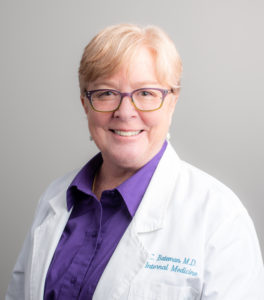 Lucinda Bateman, MD, is a renowned clinician, researcher, and educator. Her Johns Hopkins University Medical School training instilled an approach to care that she has employed throughout her career – the patient comes first and the unknown or unexplained does not equate to a lack of proper and compassionate care. Since starting her own practice in 2000, she has served on six boards or committees, been the principal investigator for 45 studies, authored/coauthored 40 journal articles, served as adjunct instructor and adjunct assistant professor in the University of Utah Departments of Preventative Medicine, Internal Medicine, and Anesthesiology, and lectured around the world.