
Listen to blog
Audio generated by AI
At a Glance
- Care takes time. Supporting people with complex illness involves ongoing attention, coordination, and follow-up – not just brief visits.
- Quality comes first. Our model protects extended visits and continuity of care, so patients are never rushed.
- Access goes beyond our clinic. While in-clinic capacity is limited, we train clinicians, share resources, and support local providers to bring informed care closer to home.
- Community makes this possible. Sliding-scale care, donor support, education, and research help ensure care is guided by need, not circumstance.
A closer look at how we provide complex care today while helping build a more informed future for patients everywhere.
At Bateman Horne Center, our purpose is to provide safe, expert care for people living with complex, multi-system illness, while also helping change how these conditions are understood and treated beyond our clinic walls.
As awareness of ME/CFS, Long COVID, and related conditions grows, so does the demand for informed care.
Many people are waiting. And we know that navigating illness in a system that often does not recognize its complexity can feel overwhelming.
In this post, we share how our care model works, what guides our decisions, and how we are expanding access while protecting quality, safety, and sustainability.
Local Clinic, National Impact
Bateman Horne Center was founded as a center of excellence in 2015 to empower patients, advance research, and improve clinical care for those affected by ME/CFS, post-infectious syndromes, fibromyalgia, and related conditions.
This includes both hands-on patient care and a broader effort to advance knowledge through research and education, helping informed care reach far beyond our clinic walls.
Our Salt Lake City clinic is just one part of that work. In our modest facility, we maintain a small clinical team dedicated to providing ongoing, individualized care for patients.
For every hour spent face-to-face, our clinical teams devote several additional hours to:
- Reviewing extensive medical histories
- Coordinating labs and specialty care
- Interpreting complex results
- Managing medications
- Communicating with patients and their other providers over time
This depth of care supports patient safety while also generating insights that inform research and provider education.
Because this level of care requires time and continuity, our clinical team can support only a limited number of patients at a time, which means many people face long waitlists. We know how difficult this can be, and it’s why we invest so heavily in education, shared resources, and our Access to Care model to help extend informed care beyond our clinic.
Providing this level of care also requires a different approach to how care is structured and supported.
Delivering the Care Our Patients Deserve
Traditional insurance models are built around short, episodic visits and do not support the depth of preparation, coordination, and follow-up our patients require and deserve.
Conforming to that model would mean shortening visits, reducing preparation, and limiting communication with patients.
To preserve extended visits, thorough preparation, and careful follow-up, we transitioned away from traditional insurance billing to a cash-pay model. This allows us to protect the elements of care that matter most: time, continuity, and clinical judgment.
We recognize that many people living with these illnesses have experienced disruptions to work and income. That reality guides our continued use of sliding-scale fees and financial assistance.
With the support of generous donors, we do our very best to replace insurance-based care with need-based care, helping ensure that financial hardship does not become an additional barrier to treatment.
Even with these structures in place, clinical revenue alone cannot sustain this work. Education, research, and philanthropy make everything possible — from training clinicians nationwide, to developing patient resources, to advancing discoveries that may one day change outcomes for millions. None of this is possible without the incredible support of our community.
Beyond Our Clinic Walls
Because no single clinic can meet the global need, BHC has always worked through multiple pathways.
Alongside direct patient care, we invest heavily in:
- Training and mentoring healthcare professionals across specialties
- Sharing clinical knowledge openly
- Developing practical tools for patients and providers
- Advancing research informed directly by patient experience
These efforts allow our clinical expertise to reach far beyond Salt Lake City, supporting patients and providers in communities across the country and around the world.
Resources such as our Clinical Care Guide and State by State Resource Directory are available free of charge for patients and clinicians alike, helping bring informed care closer to home.
We are also building our Access to Care model to support local providers through structured consultation and shared care planning, helping more patients benefit from specialized expertise closer to home and strengthening care within their own communities.
These approaches allow us to support more individuals than we could through direct care alone, while ethically and safely preserving the depth and quality of care for those we serve in our clinic.
Our Commitment
We know how difficult it can be to wait, to live with uncertainty, and to search for care in a system that too often overlooks these conditions.
While we cannot meet every need directly, we remain deeply committed to doing this work with integrity — supporting patients over time, educating clinicians, advancing research, and openly sharing tools that bring informed care closer to home.
We are honored by the trust placed in us. Together with this community, we are building something larger than any one clinic: a more informed, compassionate future for people living with complex chronic illness.
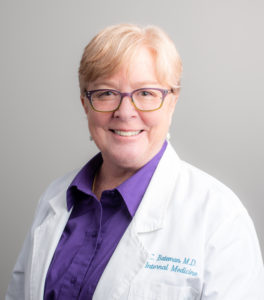 Lucinda Bateman, MD, is a renowned clinician, researcher, and educator. Her Johns Hopkins University Medical School training instilled an approach to care that she has employed throughout her career – the patient comes first and the unknown or unexplained does not equate to a lack of proper and compassionate care. Since starting her own practice in 2000, she has served on six boards or committees, been the principal investigator for 45 studies, authored/coauthored 40 journal articles, served as adjunct instructor and adjunct assistant professor in the University of Utah Departments of Preventative Medicine, Internal Medicine, and Anesthesiology, and lectured around the world.