The Next Expansion:
Why Rheumatology Must Prepare for Infection-Associated Chronic Conditions (IACCs)
When The Lancet Rheumatology published Dr. Brittany Adler’s essay, Expanding the Rheumatology Lens: Should We Embrace POTS and Post-Infectious Syndromes?, it captured a reality many in the field have recognized: patients with infection-associated chronic conditions (IACCs), POTS, dysautonomia, and ME/CFS are already here. Whether or not rheumatologists view these illnesses as “theirs,” they continue to appear in clinics, mimicking established rheumatic diseases and prompting thoughtful care.
Dr. Brayden Yellman, Medical Director at the Bateman Horne Center, responded to Adler’s essay with a perspective that underscores both the urgency and the barriers. His reflections, shaped by years in outpatient rheumatology, trace how the specialty arrived at this crossroads, the systemic challenges that limit its role, and what it will take to better support these patients.
From Joints to the Immune System and Beyond
Rheumatology has never been a static specialty. As Yellman reminds us, it began primarily as a way to manage joint problems without surgery: draining fluid from swollen joints, treating conditions like gout caused by crystal buildup, and easing common arthritis pain. But as medicine evolved, so did rheumatology.
“Later,” Yellman writes, “we came to realize that many inflammatory joint disorders had a strong basis in immune activation and dysfunction. The same immune activation that led to joint inflammation also produced systemic manifestations.”
This recognition broadened rheumatology’s reach into systemic inflammatory illnesses such as lupus, systemic sclerosis, and vasculitis. It was a logical expansion: rheumatologists were already familiar with immune modulation, and their patients were already showing up with multi-system disease.
Now, Adler argues, it is time for another expansion. Post-infectious syndromes, dysautonomia, and conditions like ME/CFS present with multi-system patterns that often mimic traditional rheumatology cases. Just as rheumatology once embraced systemic sclerosis and dermatomyositis, so too should it embrace these conditions.
Rheumatology’s Blind Spot
Embracing this expansion has its challenges. Yellman recalls giving a lecture on Long COVID and ME/CFS to an entire rheumatology network last year. While attendees acknowledged the content was interesting and well-presented, their overwhelming response was that it was “not relevant” to their practice. “This,” Yellman notes, “is the prevailing attitude at this time.”
Why? His response identifies several barriers:
- Lack of biomarkers or imaging. “Without diagnostic biomarkers or distinct imaging findings, ME/CFS, POTS, etc. must be diagnosed solely based on a complete history and physical examination,” Yellman explains. Rheumatologists, who often rely on lab tests and imaging to confirm complex diagnoses, may face challenges when those tools are absent.
- Different management tools. Most evidence suggests that the medications rheumatologists typically use to calm an overactive immune system, immunomodulatory drugs, are not effective when applied to IACCs, POTS, dysautonomia, MCAS, or hEDS. Providing comprehensive care would require a significant expansion of the therapeutic toolbelt.
- Workforce shortages. With too few rheumatologists already facing long waitlists, adding another patient population can feel impossible.
- Systemic disincentives. “We do not practice in a system that values or allows providers the time and resources necessary for good care of complex multi-system illness,” Yellman states. Productivity-based reimbursement rewards volume, not depth.
The result: patients often fall into gaps between specialties, cycling through referrals without clear answers, and may go years before receiving an accurate diagnosis.
Overlap and Uncertainty: Mimics, Comorbidities, and Diagnostic Challenges
Adler and Yellman both stress that conditions like POTS, dysautonomia, and other forms of autonomic dysfunction are not isolated illnesses. They often appear as comorbidities of ME/CFS IACCs, showing up alongside fatigue, post-exertional malaise, and cognitive impairment. For rheumatologists, this overlap is critical: patients often arrive with symptoms that resemble classic autoimmune disease.
Hands or feet that turn bluish when standing can be mistaken for Raynaud’s. Flushing from mast cell activation may be confused with lupus’s butterfly rash. Chronic dryness of the eyes or mouth can trigger a workup for Sjögren’s. As Yellman cautions, “If we only check boxes for inflammation, and don’t also consider autonomic problems or post-infectious illness, we risk two kinds of harm: telling patients they have nothing, or treating them for the wrong disease.”
But these conditions are not only mimics, they are frequently true comorbidities. Dysautonomia has been documented in lupus, Sjögren’s, and other autoimmune diseases. And patients with ME/CFS often spend years in rheumatology clinics before the right diagnosis is made.
Part of the difficulty lies in the lack of clear diagnostic standards. Unlike lupus or rheumatoid arthritis, where blood tests and imaging provide reliable markers, dysautonomia remains harder to pin down. The tilt-table test is considered the “gold standard,” but it is costly, difficult to access, and poorly reimbursed. A simpler option, the 10-minute “NASA Lean” test (passive stand test), is validated but not widely adopted. Without consensus, it is challenging for any specialty to feel confident making the call.
Yellman emphasizes that the problem runs deeper than test availability: “The way we test for these conditions was mostly designed for people whose nervous systems are shutting down, like in neurodegenerative diseases. But what we see in ME/CFS, POTS, and other infection-associated illnesses isn’t failure, it’s the nervous system misfiring. That’s a completely different problem, and it means we need different ways to measure and treat it.”
This uncertainty helps explain why many clinicians hesitate to engage more fully with these patients. Yet as Adler’s essay underscores, these patients will continue to arrive in rheumatology clinics. Without broader training and a willingness to recognize post-infectious comorbidities, too many will remain caught in diagnostic limbo.
The Systemic Challenge
Even for those who want to help, the healthcare system itself erects barriers. Yellman describes his time in private practice outside an academic center:
“The pressure to ‘see more patients’ or ‘see patients more efficiently’ to generate revenue became inescapable. Colleagues were incentivized to cherry-pick the easy cases, leaving the sickest to overwhelm a new practice. And even at academic centers, patients are stratified into highly regimented specialty clinics, designed for efficiency rather than the messy reality of multi-system illness.”
Yellman and Adler agree: rheumatology can and should play a role. But Yellman is clear that responsibility cannot rest solely with one specialty.
“With the extensive prevalence of these illnesses and the need for immediate action for the millions suffering from them, I believe we need to demand better clinical care and support from all providers within the healthcare system, and particularly, those in primary care.”
At a bare minimum, he argues, clinicians across the system should:
- Recognize post-exertional malaise (PEM) and teach patients pacing strategies.
- Diagnose dysautonomia and offer basic vascular support.
- Support work and school accommodations to break the cycle of push-crash and decline.
Yellman concludes, “we need to be making the correct diagnoses instead of telling patients they ‘don’t have anything.’ This type of dismissal can no longer be tolerated.”
A Call to Action
Patients with IACCs cannot wait for the healthcare system to catch up. They need recognition, accurate diagnosis, and support now.
At the Bateman Horne Center, our Clinical Care Guide already equips providers with practical tools to recognize post-exertional malaise, diagnose dysautonomia, and offer basic management strategies. Our next step is to turn this guide into formal training for clinicians, so these standards of care are not optional, but expected.
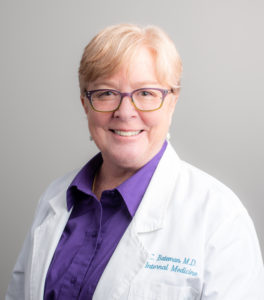 Lucinda Bateman, MD, is a renowned clinician, researcher, and educator. Her Johns Hopkins University Medical School training instilled an approach to care that she has employed throughout her career – the patient comes first and the unknown or unexplained does not equate to a lack of proper and compassionate care. Since starting her own practice in 2000, she has served on six boards or committees, been the principal investigator for 45 studies, authored/coauthored 40 journal articles, served as adjunct instructor and adjunct assistant professor in the University of Utah Departments of Preventative Medicine, Internal Medicine, and Anesthesiology, and lectured around the world.