When the Body’s Alarm Won’t Turn Off: New Clues to ME/CFS from Exercise Research
Blog Summary
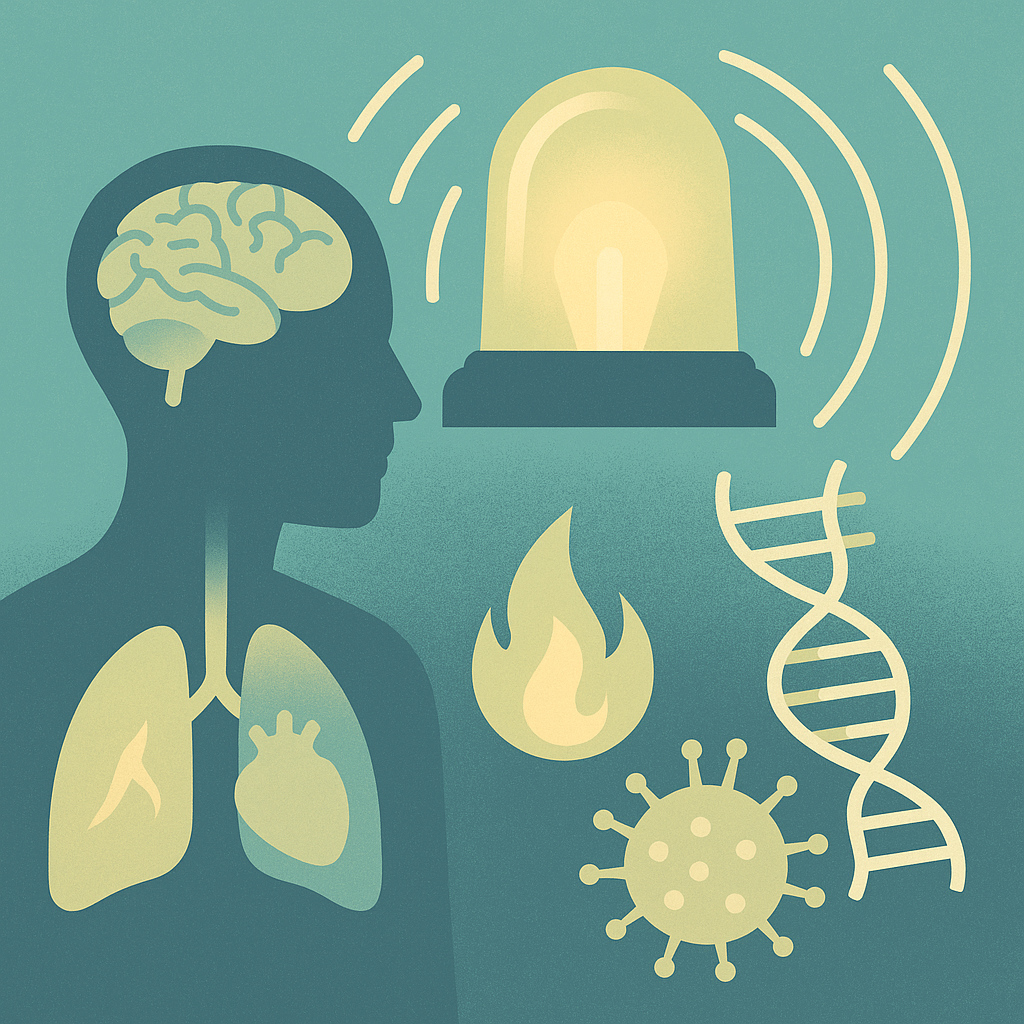
Imagine if a fire alarm kept ringing long after the smoke was gone. That’s similar to what happens in myalgic encephalomyelitis/chronic fatigue syndrome (ME/CFS), where the body seems stuck in “high alert” mode. A new multi-center study, co-authored by Bateman Horne Center’s Chief Medical Officer, Dr. Lucinda Bateman, sheds light on why even small amounts of activity can leave people with ME/CFS feeling much worse. This hallmark symptom is called post-exertional malaise (PEM).
The study at a glance
Researchers at Columbia University and across the U.S. collected blood samples from 56 people with ME/CFS and 52 healthy volunteers, before and 24 hours after a carefully monitored exercise challenge. Then they ran an unusually broad set of tests, looking at immune activity, metabolism (energy use), and proteins that keep tissues healthy.
Key findings:
- Immune system on edge: The immune system in people with ME/CFS reacted more strongly to microbial “danger signals” than in healthy controls, even before exercise. After activity, some responses looked blunted, suggesting a system that is both over-reactive and easily exhausted.
- Energy problems: Cells in ME/CFS appeared to have trouble producing clean energy after exercise. Researchers saw signs of stalled mitochondria (the “power plants” of our cells), along with chemical markers that reflect stress and fatigue.
- Gut barrier leaks: Signals suggested that the lining of the gut may be more permeable, allowing microbial fragments to “leak” into the bloodstream and trigger inflammation.
- Brain fog explained: After exertion, tryptophan (an amino acid important for serotonin and brain health) was shifted away from making protective molecules and toward producing inflammatory byproducts. This may help explain the disabling “brain fog” many people with ME/CFS experience after activity.
Why this matters
This study reinforces what patients have long described: activity can set off a cascade of problems throughout the body: immune, metabolic, and neurological. It also offers concrete biological “fingerprints” of PEM, which could guide both diagnosis and treatment in the future.
Looking ahead
The researchers outlined several possibilities for future therapies, including:
- Calming the overactive immune response
- Supporting mitochondrial (cellular energy) function
- Strengthening the gut barrier
- Restoring balance in brain chemistry pathways
These are not treatments available today, but they point the way for clinical trials which is exactly the type of research BHC is committed to advancing.
When the Body’s Alarm Won’t Turn Off: New Clues to ME/CFS from Exercise Research
What if the body’s fire alarm kept blaring long after the smoke had cleared? That’s the picture emerging from a newly published multi-center study in npj Metabolic Health and Disease that helps explain why people with myalgic encephalomyelitis/chronic fatigue syndrome (ME/CFS) can feel profoundly worse after even minor activity, a hallmark symptom known as post-exertional malaise (PEM).
Led by researchers at Columbia University with collaborators across the U.S., the team ran a biological “stress test”: they collected fasting blood from 56 people with ME/CFS and 52 healthy controls before and 24 hours after a carefully monitored exercise challenge. Then they put those samples through an unusually broad battery, probing hundreds of metabolites and proteins (multi-omics), and testing how immune cells responded when exposed to simulated microbial threats, such as bacterial toxins, viral RNA mimics, and fragments of yeast cells.
The results, taken together, suggest an immune system that’s hypersensitive to danger signals, a metabolism struggling to generate clean energy, and a gut-tissue barrier that may be letting inflammatory sparks fly. Crucially, many of these abnormalities worsened after exercise and tracked with symptom severity.
Bateman Horne Center’s own Lucinda Bateman, MD, served as an author on the study, helping recruit and characterize participants, an essential foundation for research that reflects the real clinical presentation of ME/CFS
A hair-trigger alarm in innate immunity
In whole-blood assays, the ME/CFS group showed exaggerated cytokine responses to microbial mimics—especially to a staph “superantigen” and to Candida—even before exercise. Women showed the strongest effects, aligning with known sex differences in immune regulation. By contrast, some signals that typically rev up after challenge appeared blunted following exercise, hinting at immune dysregulation or exhaustion: an overzealous alarm that also burns itself out.
In more granular tests, peripheral blood cells from the ME/CFS group produced more IL-6, a key inflammatory messenger, across a range of doses and time points. It’s a pattern consistent with trained innate immunity, an immune system that, after prior hits, responds more readily to new triggers. That could help explain why many patients trace the start of their illness to an infectious-like prodrome and why everyday exposures can rekindle symptoms.
Metabolism that misfires under load
On the metabolic side, the study points to impaired mitochondrial energy production and the cascade of effects that follow. Mitochondria are the cell’s engines, converting nutrients into usable energy. In people with ME/CFS, that system appears to stall after exertion. The researchers found elevated levels of citrate, a sign that the energy cycle was backing up, and reduced carnitines, which are needed to transport fat into mitochondria for fuel. They also detected higher levels of GDF15, a stress signal often seen in mitochondrial disorders, and its rise was closely tied to patients’ reported fatigue.
Lipids painted a parallel picture. Triglycerides and diglycerides were elevated, while acylcarnitines, molecules that help shuttle fats into energy pathways, were depleted. That pattern both reflects and drives inflammation, creating a biochemical feedback loop where cells burn through resources inefficiently, leaving the body short on energy and locked in an inflamed state.
The body’s scaffolding and the gut barrier
Proteomic analysis is the large-scale study of proteins, measuring which are present, in what amounts, and how they change under stress or disease.
In this study, proteomic analyses revealed disruptions in the extracellular matrix (ECM,) (a non-cellular network of proteins and polysaccharides that surrounds and supports cells in tissues and organs), as well as lower levels of proteins that normally help cells stick together and maintain blood vessel integrity. Those proteins also play a role in directing immune cells, so their loss could affect “traffic control” for the immune system. After exercise, the researchers saw spikes in complement proteins (part of the body’s rapid-response defense system) and S100 proteins that bind calcium. Both changes can make blood vessels leakier and fuel inflammation, aligning with patient reports of a whole-body flare during post-exertional malaise.
Other clues pointed to the gut. Levels of citrulline, a marker of intestinal lining health, were reduced; microbial byproducts shifted; and glucuronic acid rose in a way that suggests altered processing of toxins by gut bacteria. Together, the findings hint at a compromised gut barrier, making it easier for microbial fragments to seep into the bloodstream, where they could trigger immune activation and amplify symptoms after exertion.
Brain fog’s biochemical fingerprints
Cognitive slowdown, often described by patients as “brain fog,” is one of the most disabling aspects of ME/CFS. The new study suggests a biochemical trail behind it. Tryptophan, an essential amino acid, can be metabolized down two main routes: one produces serotonin, a neurotransmitter that supports mood, sleep, and cognition; the other funnels tryptophan into the kynurenine pathway, which generates a mix of neuroactive byproducts. In healthy states, these pathways remain balanced.
In people with ME/CFS, that balance appeared to shift after exertion. More tryptophan was pulled away from serotonin production and into the kynurenine pathway. Several downstream metabolites with toxic or pro-inflammatory effects, including ones that can interfere with nerve signaling, rose after exercise, while kynurenic acid, a metabolite known for its protective, calming role in the nervous system, fell.
The protein findings reinforced this picture. Several proteins that normally support healthy communication between brain cells and help the brain adapt shifted in troubling ways, hinting that neurons were under added stress. Combined with the tryptophan results, the data suggest a biochemical pathway to “brain fog.” After exercise, protective kynurenic acid dropped, while potentially harmful metabolites like quinolinic acid (which can overstimulate neurons), 3-hydroxykynurenine (which promotes oxidative stress), and 3-methoxyanthranilate (linked to fatigue and neuroinflammation) rose. The balance tipped toward disruption rather than repair — a molecular echo of what patients describe: mental clarity slipping away after even modest activity, sometimes for days.
What’s next?
The authors outline several therapeutic directions to test in future clinical studies:
- Dialing down immune overactivity: Exploring treatments that calm the innate immune system, such as IL-37 or mTOR-targeted drugs.
- Boosting mitochondrial function: Strategies like carnitine supplementation to help cells produce energy more efficiently.
- Repairing the gut barrier: Using tailored prebiotics or probiotics to correct dysbiosis and reduce “leaky gut”–driven inflammation.
- Balancing tryptophan pathways: Carefully tested approaches to restore serotonin production and reduce toxic byproducts of tryptophan metabolism.
Although these are not prescriptions today; they’re roadmaps for trials: the kind BHC champions with patient-centered design, careful pacing guidance, and biomarker-driven endpoints.
You can help accelerate this work. With your support, the Bateman Horne Center can continue driving research that turns discoveries into real treatments for people living with ME/CFS. DONATE TODAY
 Lucinda Bateman, MD, is a renowned clinician, researcher, and educator. Her Johns Hopkins University Medical School training instilled an approach to care that she has employed throughout her career – the patient comes first and the unknown or unexplained does not equate to a lack of proper and compassionate care. Since starting her own practice in 2000, she has served on six boards or committees, been the principal investigator for 45 studies, authored/coauthored 40 journal articles, served as adjunct instructor and adjunct assistant professor in the University of Utah Departments of Preventative Medicine, Internal Medicine, and Anesthesiology, and lectured around the world.