
Understanding the Potential of Oxaloacetate for Long COVID and ME/CFS
A Q&A with Suzanne Vernon, PhD and Jennifer Bell, FNP-C
The REGAIN study, published in Frontiers in Neuroscience, explored the effects of oxaloacetate (OAA), a naturally occurring compound, on individuals living with Long COVID. Conducted as a randomized, placebo-controlled trial, the study examined cognitive performance, symptom burden, and fatigue using a variety of assessment tools.
Given the significant overlap between Long COVID and myalgic encephalomyelitis/chronic fatigue syndrome (ME/CFS), these findings may hold important implications for both communities. We have received several questions from patients, caregivers, and clinicians about what the results mean and how they may apply to real-life care and asked two contributors from BHC, Suzanne Vernon, PhD, and Jennifer Bell, FNP-C, to respond to common questions about efficacy, tolerability, product use, and more.
This Q&A is not intended as medical advice. Always consult with your healthcare provider when considering new treatment approaches.
Efficacy & Target Population
QUESTION:
Based on your perspective, how does the cognitive improvement seen in REGAIN (e.g., faster reaction time) translate into real-life benefits?
ANSWER:
We see that improved reaction time increases the ability to do many daily activities more efficiently and safely. For example, driving, improved reaction time, even a split second, can mean the difference between driving and not. In the REGAIN study, we also saw improved sustained focus, information processing, and cognitive efficiency or stamina. Sometimes the lifting of the brain fog can lessen fatigue, but not all the time.
QUESTION:
Could oxaloacetate help with Long COVID symptoms, especially cognition or overall symptom burden, even if fatigue scores on the Chalder Fatigue Questionnaire (CFQ) aren’t significantly reduced?
ANSWER:
Yes. The REGAIN study results support this. The CFQ is designed to assess physical and cognitive fatigue and is often used to assess mild to moderate ME/CFS. However, the CFQ has limitations in detecting the treatment effects of the multidimensional nature of fatigue in Long COVID and ME/CFS. The DePaul Symptom Questionnaire (DSQ-SF), also used in this study, is more sensitive to the unique characteristics of ME/CFS and Long COVID. The DSQ-SF did show a significant reduction in fatigue and symptom burden.
Comparison Across Trials
QUESTION:
How do the results from the 6-week REGAIN Long COVID trial compare to the earlier 3-month randomized control study in ME/CFS (RESTORE ME)?
ANSWER:
RESTORE ME subjects had mild to moderate ME/CFS and showed more improvement in fatigue. REGAIN subjects had mild to moderate Long COVID and showed more improvement in overall symptoms and cognition. It is not clear as to why the two groups responded differently. One possibility could be that the Long COVID subjects had been sick for a shorter period of time, which may make them more responsive to interventions, especially neuroinflammation. ME/CFS patients who have been sicker for longer may be more responsive to the cellular energy production effects of OAA thus improving fatigue.
Dosing & Duration
QUESTION:
Both trials used 2,000 mg/day. Is this dose the “sweet spot”?
ANSWER:
The therapeutic dose varies with each person. Patients who have discontinued the study report improvement at a lower dose, such as 500mg to 1000mg daily. Some use it as needed for situations when they are more physically or cognitively challenging.
QUESTION:
Are there signs that increased duration might enhance fatigue outcomes?
ANSWER:
We do not have any data on the long-term use of OAA and its enhanced impact on fatigue.
Symptom‑Specific Benefits
QUESTION:
Which scale (CFQ or DSQ-SF), cognitive tests, quality-of-life indices, should I rely on most for monitoring?
ANSWER:
The DSQ-SF is specifically designed for the multi-dimensional characteristics of ME/CFS and Long COVID and is considered more sensitive to this population’s symptom response.
Safety & Tolerability
QUESTION:
Were there any adverse events in REGAIN similar to those seen in RESTORE ME (e.g. mild nausea, headache)?
ANSWER:
Most adverse events in the treatment groups were mild to moderate and “possibly” related to the OAA as opposed to “probably” related. In the RESTORE ME study, headaches and nausea, 3- 5% of subjects, were the most common. One subject on the OAA arm had severe abdominal pain. In the REGAIN study the most common adverse events were GI symptoms of vomiting, diarrhea and abdominal pain in < 5% of the subjects. 3% of subjects in the OAA arm reported upper respiratory infections.
Overall, OAA proved to be very well tolerated with minimal side effects in both studies.
Comparing Products
QUESTION:
Does product formulation (e.g., medical food vs generic oxaloacetate supplements) matter in achieving cognitive or fatigue improvements seen in trials?
ANSWER:
Both RESTORE ME and REGAIN studies have been with the “medical food” concentration of OAA (500mg). The “generic OAA supplement” is a lower concentration of OAA (100mg) with citric acid (150mg). Some people do respond to lower doses than studied in the trials, but we haven’t studied the lower doses for effectiveness.
QUESTION:
Would you recommend one formulation over another, based on absorption, purity, or clinical outcomes?
ANSWER:
We recommend the medical food formulation, as this is the formulation from which we have the data.
Exploring OAA use for me
QUESTION:
Can you offer any advice on how I should approach my primary care provider about using OAA?
ANSWER:
OAA has been shown to be very safe and well tolerated by ME/CFS and Long COVID patients. A number of patients have had definite improvement in fatigue and cognitive function, but many have not had any benefit. The cost of the medical food OAA remains the biggest barrier for patients considering it. You may want to share the links to the RESTORE ME and REGAIN studies with your provider.
RESTORE ME:
https://www.frontiersin.org/journals/neurology/articles/10.3389/fneur.2024.1483876/full
REGAIN STUDY:
https://www.frontiersin.org/journals/neuroscience/articles/10.3389/fnins.2025.1627462/full
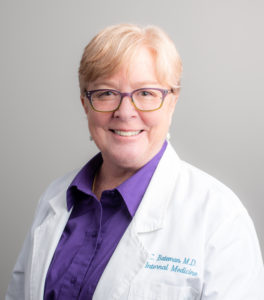 Lucinda Bateman, MD, is a renowned clinician, researcher, and educator. Her Johns Hopkins University Medical School training instilled an approach to care that she has employed throughout her career – the patient comes first and the unknown or unexplained does not equate to a lack of proper and compassionate care. Since starting her own practice in 2000, she has served on six boards or committees, been the principal investigator for 45 studies, authored/coauthored 40 journal articles, served as adjunct instructor and adjunct assistant professor in the University of Utah Departments of Preventative Medicine, Internal Medicine, and Anesthesiology, and lectured around the world.