
From October 22 through October 25, I attended the 2025 IACFSME 17th Research and Clinical Conference (International Association for Chronic Fatigue Syndrome/ Myalgic Encephalomyelitis), which was conducted virtually. That is a mouthful, for sure, but this organization and conferences, hold a place dear to my heart, dating back to when it was established in 1990. This small, all volunteer non-profit organization has survived/thrived as a pioneer for bringing together scientists and clinicians interested in ME/CFS. It was at these conferences that those in the field met to share ideas and network together. For example, members of the U.S. ME/CFS Clinician Coalition, who published the landmark paper about diagnosis and treatment of ME/CFS in the Mayo Clinic Proceedings in 2021, became friends and colleagues at these conferences, dating back more than 30 years.
The changing name over time reflects the organization’s efforts to grow and be inclusive – first it was called AACFS (American Association of CFS), then IACFS (International Association of CFS), then IACFS/ME to recognize the term myalgic encephalomyelitis (ME).
Before the COVID-19 pandemic, the conferences were always in-person. It was a very important way to stay connected with the relatively few clinicians and scientists around the world who care about people with ME/CFS. I signed up for a lifelong membership after my first year.
It is a challenge to describe this huge conference in a short blog. Speakers “Zoomed” from many respected institutions around the U.S., but also from the England, Scotland, Germany, Norway, Australia, Russia, Japan, and Canada. Sadly, several scheduled speakers from federal agencies such as the CDC and NINDS, were absent due to the government shutdown, leaving gaps in the schedule filled in bravely by others using their slides or publication references the best they could.
A keynote speaker, and prominent Long COVID (LC) epidemiologist and advocate, Ziyad Al-Aly, MD, from the VA St. Louis Healthcare System, talked about how LC can inform science about infection-associated chronic illness, including ME/CFS.
Major categories of scientific presentations included clinical management of ME/CFS and LC, case definitions, treatment trials (rituximab, oxaloacetate, hydrogen water, hyperbaric oxygen, sleep medications, and a massive online patient survey of treatments they use), infectious disease connections, post-exertional malaise, immunology, public health (school absenteeism in children, involving lived-experience experts), neurology, genetics and promising biomarkers.
My favorite part of the conference is always the final speaker, Anthony Komaroff, MD, my longtime friend and mentor from Harvard, who traditionally summarizes the high points of the conference. This year, he reflected on the history of ME/CFS science from his perspective of 40 years in the field. Approaching his 85th year, he didn’t hold back criticism of the medical profession for remaining largely unaware of good research showing “evidence of abnormalities involving the central and autonomic nervous system, immune system, energy metabolism, vascular system and gut microbiome.” He said, “My advice to those who say ‘no one can find anything wrong in these patients’ is simple: Try reading the literature! The literature now contains over 12,000 publications on ME/CFS and over 40,000 publications on Long COVID, not to mention literature on related conditions like fibromyalgia, post- treatment Lyme disease, Gulf War Illness and many post-infections syndromes.”
After briefly summarizing most of the presentations, Dr. Komaroff finished up with insightful comments about why it may be taking so long for doctors and scientists to “come up with a cure.” First of all, there are many diseases, including heart disease, multiple sclerosis and breast cancer, that we haven’t been able to cure for centuries, although prevention and treatments have evolved tremendously. It was good to be reminded that amazing modern technologies now available might speed the scientific process (fMRI and PET scans, gene expression, genomics/proteomics/other ‘omics, and even AI to help more rapidly solve puzzles). It was good to be reminded that many major facts of biology were unknown in the 1980s and 1990s, including sequences of the human genome and major pathogens, complexities of the immune system, the role of glial cells in the brain, and the importance of the microbiome. He ended by stating that “40 years ago we knew nothing about the underlying biology of ME/CFS. Today, multiple abnormalities involving the CNS and ANS, immune system, energy metabolism, vascular system and gut microbiome have been identified and replicated. This conference has demonstrated that continuing progress…. Although we have not yet reached our goal of preventing and curing this disease, every month brings new progress toward that goal.”
I came away from the 2025 IACFSME scientific and clinical conference feeling that hope. I’m grateful for the dedication of IACFSME board members who donated countless hours to conference planning. I’m also proud of the BHC providers who contributed as speakers. Our own Suzanne Vernon, PhD, gave a presentation about the BHC oxaloacetate trials for ME/CFS and Long COVID. Melanie Hoppers, MD, Clayton Powers, PT, DPT, and Jennifer Bell, FNP-C teamed up to give a 2-hour presentation on diagnosis and management of ME/CFS and LC. Go BHC!
Recordings of the lectures are only available to those who paid to attend the conference, but the agenda can be viewed here.
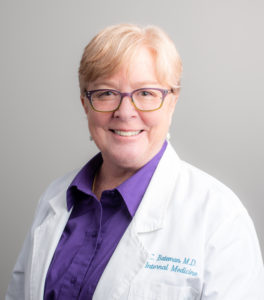 Lucinda Bateman, MD, is a renowned clinician, researcher, and educator. Her Johns Hopkins University Medical School training instilled an approach to care that she has employed throughout her career – the patient comes first and the unknown or unexplained does not equate to a lack of proper and compassionate care. Since starting her own practice in 2000, she has served on six boards or committees, been the principal investigator for 45 studies, authored/coauthored 40 journal articles, served as adjunct instructor and adjunct assistant professor in the University of Utah Departments of Preventative Medicine, Internal Medicine, and Anesthesiology, and lectured around the world.