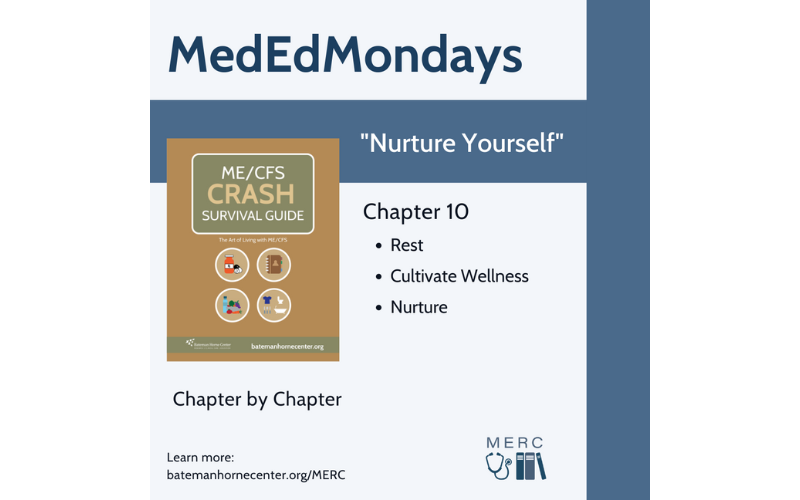
This blog post covers the tenth chapter of the ME/CFS Crash Survival Guide. The information provided can also apply to individuals with Long COVID and other multi-system chronic complex illnesses that have post-exertional malaise (PEM) symptoms.
Click here to download the entire guidebook.
Nurture Yourself
When living with ME/CFS, it may be tempting to let your mind fixate on what caused the illness or a crash. You may even feel yourself slipping into a state of self-blame. Simply put, this is not helpful to your crash recovery and is not supportive when living with the disease.
Remember, not every crash can be timed, explained, or understood; and neither can disease onset. Consider taking an opposite approach and rest in the moment rather than analyze the unexplained.
Be mindful of cognitive and emotional energy drainers that may lead to a crash and/or prolong your crashed state. Allow yourself to heal and restore your health, this is the only necessary task when in a crash.
Lay back and let the boat carry you until you feel healed enough to get back up.
Let yourself rest!
- Stay horizontal
- Decrease sensory stimuli
- Utilize calming techniques
Cultivate wellness
- When not in a crash, practice wellness techniques that help calm your system.
- Meditation
- Deep breathing
- Mindfulness practice
Nurture self
- Practice self-compassion
- Body gratitude
- Acceptance
- Give yourself permission to rest and heal.
This blog post covers the tenth chapter of the ME/CFS Crash Survival Guide.
Click here to download the entire guidebook.
The information provided can also apply to individuals with Long COVID and other multi-system chronic complex illnesses that have post-exertional malaise (PEM) symptoms.
Bateman Horne Center relies on charitable contributions to produce
educational content such as the ME/CFS Crash Survival Guide.
Support our work by donating today!
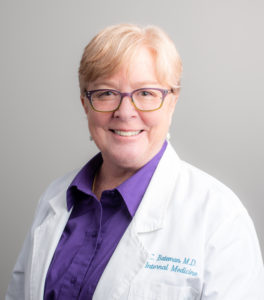 Lucinda Bateman, MD, is a renowned clinician, researcher, and educator. Her Johns Hopkins University Medical School training instilled an approach to care that she has employed throughout her career – the patient comes first and the unknown or unexplained does not equate to a lack of proper and compassionate care. Since starting her own practice in 2000, she has served on six boards or committees, been the principal investigator for 45 studies, authored/coauthored 40 journal articles, served as adjunct instructor and adjunct assistant professor in the University of Utah Departments of Preventative Medicine, Internal Medicine, and Anesthesiology, and lectured around the world.