New CPET Guidelines: What They Mean for People with ME/CFS
The American College of Sports Medicine’s Guidelines for Exercise Testing and Prescription, for the first time, includes a section on ME/CFS. ACSM is a leading authority on exercise science, and these guidelines serve as a foundational text for exercise professionals to guide safe and effective exercise testing and programming. The guidelines were released on the use of cardiopulmonary exercise testing (CPET) in research and clinical practice for myalgic encephalomyelitis/chronic fatigue syndrome (ME/CFS). These guidelines are important because CPET has long been one of the few tools that objectively capture the hallmark feature of ME/CFS: post-exertional malaise (PEM).
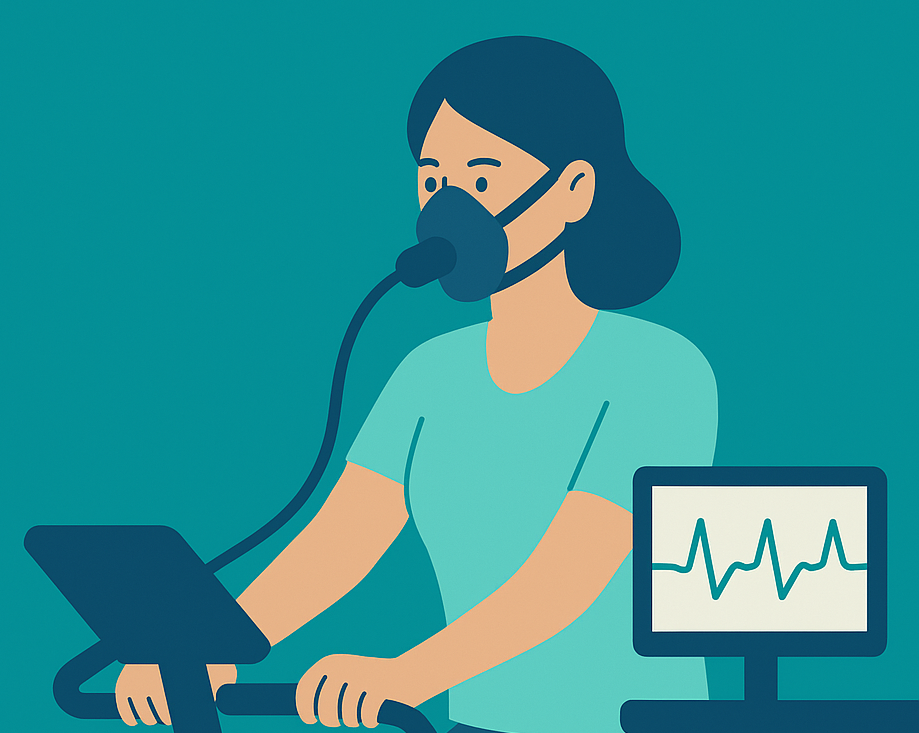
What is CPET?
CPET measures how the heart, lungs, and metabolism respond to exercise. For both healthy individuals and those with chronic diseases, results show predictable and repeatable patterns. However, for people with post-exertional malaise, CPET can reveal an abnormal response: reduced capacity and impaired recovery on the second day of testing. The two-day CPET pattern provides objective evidence of PEM, a symptom patients describe as a worsening of fatigue, pain, and cognitive issues after even small amounts of activity.
What the Guidelines Recommend
The new guidelines emphasize:
- Two-day testing is essential to reveal PEM. A single test often misses the core dysfunction seen in ME/CFS and Long COVID.
- Patient safety must come first. Due to the exertional nature and intensity of the 2-day CPET patients with PEM may experience a deep or prolonged crash following the testing procedure. For this reason, guidelines caution against using the test routinely in clinical care. Instead, it should be reserved for research or disability documentation, and only when the potential benefits outweigh the risks. To date, however, it remains the most reliable way to provide clear, objective evidence of the disease.
- Adapted protocols matter. The guidelines call for standardized methods to improve accuracy while minimizing the impact of PEM.
Why Specialized Training Matters
Because CPET is not risk-free for people with PEM, it is critical to seek out professionals who are specifically trained in applying the test to this illness. Harms can occur by design, as the test intentionally provokes metabolic dysfunction to document how physical exertion triggers measurable impairment. These physiologic stressors can lead to a loss of function and reduced work capacity in the days or weeks that follow (a PEM crash) – an outcome that is atypical across most other chronic health conditions.
Proper calibration, biological validation, and meticulous attention to accuracy are essential; yet, many labs do not perform these steps consistently. Specialists trained by groups such as Workwell Foundation, who have pioneered standards for testing and equipment validation in this population, understand how to conduct the test as safely as possible, interpret the distinct patterns seen in ME/CFS, and use the results to support patients in meaningful ways.
Although CPET is still considered the gold standard for assessing cardiorespiratory fitness, the two-day CPET model offers distinct diagnostic and functional insights for people with ME/CFS. Day-to-day changes in metabolic function can reveal post-exertional malaise and other impairments unique to this illness. In addition to measuring exertional intolerance, CPET can also aid in differential diagnosis when additional cardiopulmonary or autonomic conditions are present.
Validating the illness and its severity. For a condition that lacks definitive biomarkers, the two-day CPET provides objective, measurable data that confirms functional impairment and the reality of PEM.
- Combating medical bias. Hard data from CPET helps counter historical biases that have led some medical professionals to dismiss ME/CFS as psychosomatic.
- Quantifying disability. CPET not only provides the objective data needed to document functional limitations for disability claims, it can also reveal previously unidentified pulmonary, cardiac, or cardiovascular abnormalities – particularly in people who were never evaluated with CPET during their diagnostic journey. This is especially relevant in long COVID and other post-inflammatory illnesses where organ damage and exercise intolerance may coexist with PEM. Guiding clinical management. By measuring a patient’s true functional capacity, CPET can inform individualized strategies such as setting safe heart rate limits, to help patients avoid triggering PEM.
- Supporting pacing. Data on oxygen consumption and “anaerobic threshold” (gas exchange threshold) help patients implement pacing, a cornerstone of PEM management.
- Moving away from harmful therapies. CPET reinforces why treatments such as Graded Exercise Therapy (GET) are inappropriate and potentially harmful for people with PEM, whose condition worsens with exertion.
Looking Ahead
As the field advances, CPET will continue to play a critical role in research, helping scientists better understand the underlying pathophysiology of ME/CFS, Long COVID ME/CFS and related post-infectious conditions. For patients, the takeaway is clear: CPET not only validates the lived experience of PEM and improves access to necessary support resources (disability, etc.), but it also underscores the need for pre-and post-test supports to help patients recover more fully. Establishing protocols that anticipate PEM (such as medical monitoring, rest planning, and recovery care) is becoming an increasingly important focus as the community seeks to reduce PEM consequences and strengthen outcomes.
We want to congratulate the groundbreaking work of Todd Davenport, DPT, PhD, Mark VanNess, PhD, Staci Stevens, MA, and the Workwell Foundation who have dedicated years to advancing research in ME/CFS.
 Lucinda Bateman, MD, is a renowned clinician, researcher, and educator. Her Johns Hopkins University Medical School training instilled an approach to care that she has employed throughout her career – the patient comes first and the unknown or unexplained does not equate to a lack of proper and compassionate care. Since starting her own practice in 2000, she has served on six boards or committees, been the principal investigator for 45 studies, authored/coauthored 40 journal articles, served as adjunct instructor and adjunct assistant professor in the University of Utah Departments of Preventative Medicine, Internal Medicine, and Anesthesiology, and lectured around the world.