Listen to blog
Listen. Believe. Do No Harm.
An occupational therapist’s guidance for caring well for people with severe ME/CFS
For someone with severe myalgic encephalomyelitis/chronic fatigue syndrome (ME/CFS), being sick is a full-time job. Light, sound, conversation, movement, sitting upright, eating, even being asked a question, all of it can cost more energy than the body has to spend. For these patients, healthcare itself can become one more source of exertion.
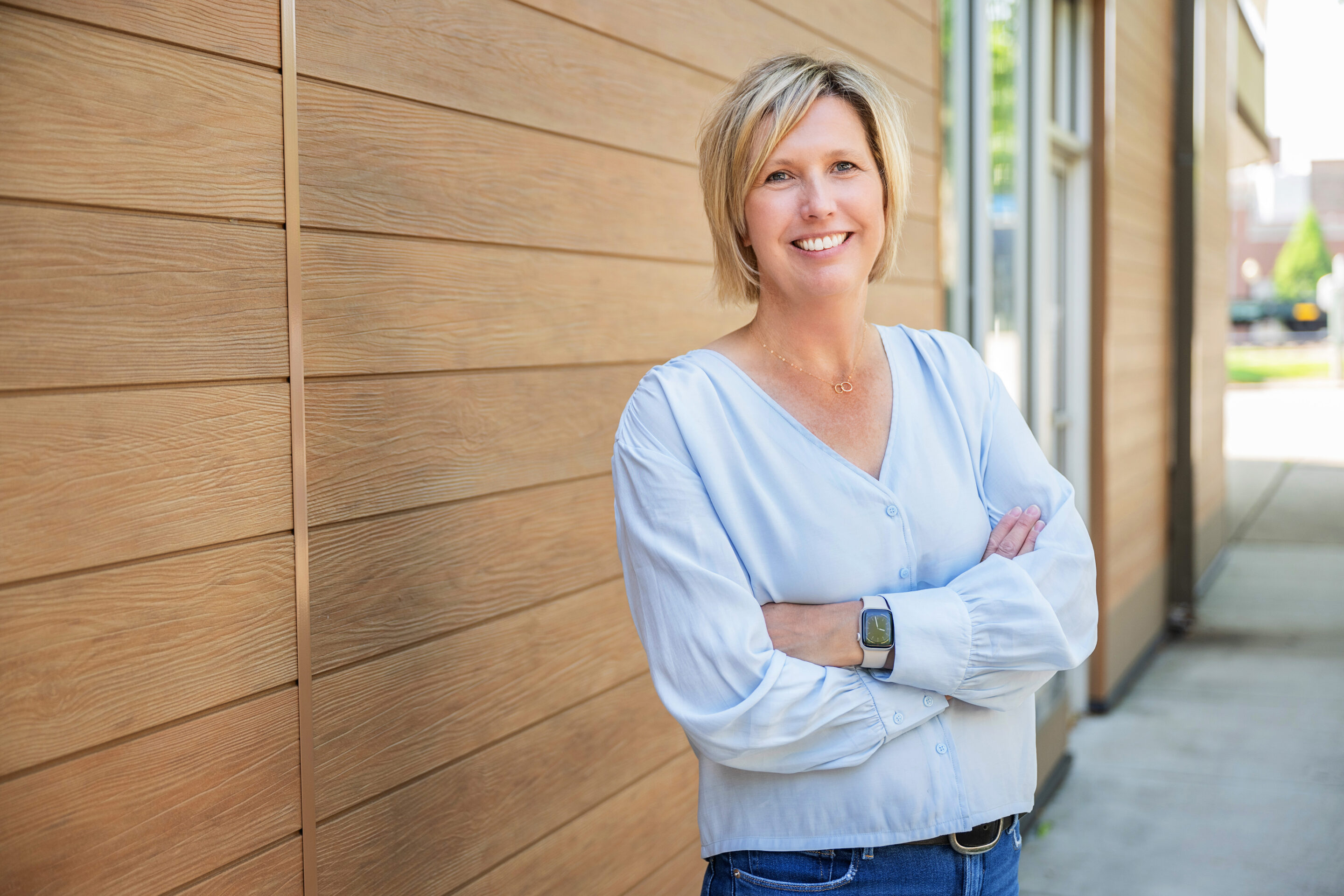
That was the starting point for Amy Mooney, MS, OTR/L, when she joined Bateman Horne Center’s “Coffee” with a Clinician for Severe ME/CFS Awareness Month. Amy is an occupational therapist and a caregiver herself, and she came with a message she wanted every provider, and every caregiver, to sit with: care should be built around what a person’s body can actually tolerate, not around what we’ve been trained to expect a patient to tolerate.
Here’s what she shared.
BHC: What do you wish every healthcare provider understood about caring for someone with severe ME/CFS?
Above everything else: do no harm.
That has to be the starting point.
More treatment, more activity, more intervention is not automatically better. Sometimes the most helpful thing a clinician can do is reduce demands, protect rest, and create stability rather than push for progress. Good care for severe ME/CFS means building around the patient’s real threshold, not the one we assume a patient “should” have.
Listen
Listening starts with actually hearing what a patient says about their limits and not judging their capacity by what is observed in a single, brief visit.
Function in severe ME/CFS can fluctuate dramatically, so we encourage asking not just “Can you do this?” but “What happens when you do this? What are the consequences?”
Listening also means paying attention to the environment. Light, sound, touch, temperature, conversation, upright positioning, movement, even other people being in or near the room – all of it can be a physiologic stressor. The environment itself can determine whether a healthcare visit is accessible or harmful.
And listening includes the caregiver. In severe ME/CFS, a patient may not have the capacity to communicate for themselves. Caregivers often notice the subtle changes in a patient’s condition first and know what they can and can’t tolerate. Letting them share the communication burden isn’t a shortcut; it’s part of attentive care.
Believe
Believing a patient means more than saying, ‘I believe you,’. It means witnessing what’s happening and acting on it.
- If a patient says upright posture or movement worsens their symptoms, notice which body systems are involved and change the approach.
- If conversation is exhausting, change how you communicate.
- If a caregiver says the patient is reaching their limit, respond to it.
Believing also means advocating. Patients with severe ME/CFS often have very little capacity to navigate healthcare and support systems on their own, while clinicians hold credibility and access that patients and caregivers frequently don’t.
Documentation is part of that advocacy: clearly recording functional limitations, symptom exacerbation, environmental barriers, and necessary supports can make the difference in whether a patient can receive equipment, home-based services, disability benefits, or appropriate care.
Respect
Check your baggage at the door.
Leave behind assumptions about what illness should look like, what someone should be able to do, or what recovery should look like. Many patients and caregivers know more about ME/CFS, their co-occurring conditions, and their own symptom patterns than the professionals treating them. Professional expertise works best alongside that lived experience, not above it.
That respect extends to what matters to the person. Rather than imposing an external definition of function or independence, ask: What is meaningful and purposeful to this person? What is the “Golden Nugget” that will make a difference in their quality of life?
For someone with severe ME/CFS, meaningful participation may look very small from the outside but be profoundly important all the same.
Our role isn’t to define what someone’s life should look like. It’s to help create the safety, stability, and support that lets them take part in what matters most to them.
BHC: What are some practical ways clinicians can improve quality of life?
Start with the reality of severe ME/CFS.
Functional capacity is very limited, and the margin between baseline and threshold is narrow. Exertion isn’t only physical, it’s also cognitive, sensory, orthostatic, and emotional or social. Eating, talking, sitting upright, processing information, tolerating light or sound, and even interacting with another person can all draw from the same limited pool. The goal is to understand the total exertion involved in daily life.
Break activities into their parts.
As clinicians, Occupational Therapists (OTs) are trained to look at activities through activity analysis, breaking a task into its individual demands. Patients, caregivers, and clinicians are all encouraged to ask the same questions:
- What are all the individual demands within this activity?
- Which parts create the most exertion?
- What can be eliminated, simplified, modified, or delegated?
Take eating. It isn’t just eating, it can involve adjusting position, reaching, using utensils, chewing, swallowing, digesting, tolerating smell and texture, and making choices or communicating. Breaking it apart reveals exactly where the exertion is hiding.
Find the Golden Nugget.
Once an activity is broken down, ask: What is the essential or most meaningful part of this activity? Then strip away whatever isn’t necessary to get there.
- Eating → the goal is nutrition, not necessarily sitting upright or finishing within a set window.
- Connecting with family → the goal is connection, not necessarily a face-to-face conversation.
- Hygiene → the goal is feeling clean and comfortable, not completing an entire routine in one go.
Build a toolbox of supports.
Once the essential purpose is clear, clinicians can help make the rest of the activity more manageable, modifying positioning to reduce orthostatic stress, reducing sensory demands, simplifying communication, using equipment, having a caregiver handle setup, breaking tasks into smaller pieces, or building in rest before, during, and after. Small modifications add up.
Protect capacity for what matters.
This is the most important distinction: we are not reducing exertion so we can fill that space with more activity. We’re reducing unnecessary exertion so a person has the greatest possible opportunity to spend their limited capacity on what’s essential and meaningful, communicating with someone they love, listening to music, looking out a window, time with a pet, taking part in one small piece of their own care, and, just as importantly, getting more restorative rest.
Instead of asking, “How can we help this person do more?” let’s ask: “What matters most, and how can we make that more manageable within the capacity they have?” The goal isn’t doing more. It’s doing what matters.
BHC: As a caregiver yourself, what advice would you offer other caregivers?
Believe yourself as a witness.
We talk often about believing patients. Caregivers need to believe themselves too. Caregivers face the same doubt and disbelief that patients do, from healthcare professionals, from family and friends, from the outside world, and over time it’s easy to start questioning yourself: Am I overreacting? Is it really this bad? Could I be seeing this wrong? Trust what you have witnessed. What you are seeing is real.
Recognize your own lived experience.
A caregiver’s experience is not the same as the experience of the person who is ill, and that distinction matters. But caregivers carry a lived experience of illness too, watching someone they love suffer, watching their world grow smaller, navigating loss of independence, uncertainty, hard healthcare decisions, and disbelief from others. Watching someone you love in significant pain can be traumatic in its own right.
Give yourself permission to acknowledge what this has cost you.
You can love the person you’re caring for deeply and acknowledge how caregiving has affected you. Both are true at once. You don’t have to minimize your own experience because someone else is suffering more. Caregivers deserve to be heard without having to defend or explain what’s happened. Caregivers deserve care too.
Find your safe spaces.
Look for people who believe you and don’t ask you to justify the severity of what you’re living through, people you can talk to honestly about fear, grief, exhaustion, anger, loss, hope, and love. Find people who let you name what caregiving has cost you while still honoring the person you love.
Find ways to come back to yourself.
Caregiving can slowly consume your identity. Wherever you can, find your people. Find moments that belong to you. Find joy without guilt. Find things that remind you who you are outside of caregiving. Accept care when it’s offered. Find your peace.
A closing thought
There is room to honor both experiences: the person living with illness and the person walking alongside them. Both deserve to feel seen and understood, and to be met with compassion, care, and support.
Adapted from speaker notes prepared by Amy Mooney, MS, OTR/L, for Bateman Horne Center’s August 12, 2026, “Coffee” with a Clinician, held in recognition of Severe ME/CFS Awareness Month.
Knowledge Shared. Lives Changed.
BHC relies on charitable contributions to produce educational content.
Support our work by donating today!
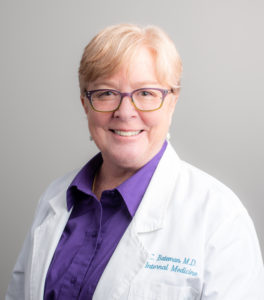 Lucinda Bateman, MD, is a renowned clinician, researcher, and educator. Her Johns Hopkins University Medical School training instilled an approach to care that she has employed throughout her career – the patient comes first and the unknown or unexplained does not equate to a lack of proper and compassionate care. Since starting her own practice in 2000, she has served on six boards or committees, been the principal investigator for 45 studies, authored/coauthored 40 journal articles, served as adjunct instructor and adjunct assistant professor in the University of Utah Departments of Preventative Medicine, Internal Medicine, and Anesthesiology, and lectured around the world.