Bateman Horne Center: A Center of Excellence Born from Urgency and Vision
When Dr. Lucinda Bateman founded the Bateman Horne Center (BHC), she carried with her both the weight of history and a clear vision for the future of care. For decades, she, along with patient advocates and other medical experts had called for federally funded Centers of Excellence for Myalgic Encephalomyelitis/Chronic Fatigue Syndrome (ME/CFS). Reports from the Chronic Fatigue Syndrome Advisory Committee and recommendations to the National Institutes of Health highlighted the urgent need for hubs that could unite clinical care, research, and education. Despite these recommendations, no federally funded Centers of Excellence were ever created.
Dr. Bateman recognized that people living with ME/CFS, Long COVID, and other infection-associated chronic conditions could not wait. In response, she set out to create the kind of Center of Excellence patients needed — an integrated model where specialized clinical care, scientific discovery, and education are not separate silos, but mutually reinforcing parts of a whole.
The Roots of BHC: OFFER
The Bateman Horne Center’s story began with the Organization for Fatigue and Fibromyalgia Education and Research (OFFER), which Dr. Bateman founded in 2002. OFFER was a grassroots nonprofit built on volunteer energy, small donations, and annual educational conferences that drew hundreds of patients and families.
In 2013, a generous $100,000 bequest gave OFFER the opportunity to think bigger. With encouragement from its board, OFFER pursued the bold idea of creating a Center of Excellence that would unite patient care, research, and education. A consultant’s report concluded that this vision would be financially impossible, but Dr. Bateman and the dedicated OFFER board members persisted.
By merging OFFER with her long-standing fatigue consultation clinic, the Bateman Horne Center of Excellence was born in 2015, named in honor of Dr. Bateman’s late sister, Shauna Bateman Horne.
What Is a Center of Excellence?
A Center of Excellence is more than a title. It represents a commitment to concentrated expertise, shared standards, and resources designed to improve outcomes. For ME/CFS, Long COVID, and related conditions where few clinicians are trained and patients often struggle to access informed care—the Center of Excellence model provides a framework for lasting impact.
At BHC, this model comes to life through:
Concentrated Expertise
BHC focuses exclusively on complex post-infectious and multisystem illnesses, providing specialized, informed care where few providers exist.
Evidence-Informed Tools
Through resources like the Clinical Care Guide, BHC translates clinical knowledge into practical strategies that providers everywhere can use to improve diagnosis and management.
Education at Scale
In partnership with the Open Medicine Foundation, BHC’s Medical Education Resource Center (MERC) has trained thousands of healthcare professionals across the U.S. and internationally. Accredited CME courses, Grand Rounds, Project ECHO sessions, and clinical training prepare both current and future providers.
Research and Innovation
Collaborations with leading institutions fuel biomarker discovery, diagnostic tools, and clinical trials, ensuring that research findings inform the care BHC provides and teaches.
Community Support
Beyond medical care, BHC offers support groups, caregiver resources, and educational programs that help reduce isolation and strengthen community connections.
Why Dr. Bateman Pursued This Model
When the federal government did not establish Centers of Excellence for ME/CFS, Dr. Bateman saw no choice but to act. Patients were left without adequate medical care, children were being overlooked, and too few clinicians had the training to help. By creating an independent Center of Excellence, she demonstrated that this model could be built from the ground up and powered by patients, families, volunteers, and donors who believed in the vision.
For Dr. Bateman, pursuing a Center of Excellence was never about recognition. It was about responsibility: to bring clinical care, education, research, and community together under one mission. The Bateman Horne Center shows what is possible when vision is paired with persistence—and why this model remains critical for addressing the needs of people with ME/CFS, Long COVID, and other post-infectious conditions.
BHC continues to prove that Centers of Excellence don’t have to wait for federal funding
and that they can be built by communities that refuse to let patients go without care.
Please help scale our mission by supporting BHC’s work and bringing
our model and expertise to more around the world.
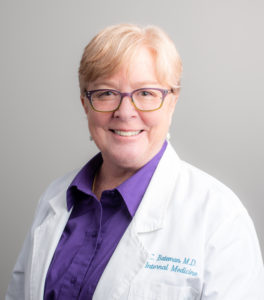 Lucinda Bateman, MD, is a renowned clinician, researcher, and educator. Her Johns Hopkins University Medical School training instilled an approach to care that she has employed throughout her career – the patient comes first and the unknown or unexplained does not equate to a lack of proper and compassionate care. Since starting her own practice in 2000, she has served on six boards or committees, been the principal investigator for 45 studies, authored/coauthored 40 journal articles, served as adjunct instructor and adjunct assistant professor in the University of Utah Departments of Preventative Medicine, Internal Medicine, and Anesthesiology, and lectured around the world.